
Silk Road Gobi Akashic Grid

https://en.wiktionary.org/wiki/gobi
Definitions
[edit]
壁
- wall; partition (Classifier: 堵 mn)
- rampart; defensive wall
- cliff; precipice
- 峭壁 ― qiàobì ― cliff; steep
- something resembling a wall; lumen; surface
- (astronomy) (~宿) Wall (Chinese constellation)
https://en.wiktionary.org/wiki/壁#Chinese

Synonyms
Phono-semantic compound (形聲, OC *peːɡ): semantic 土 (“earth”) + phonetic 辟 (OC*peɡ, *pʰeɡ, *beɡ) – an earthen wall.
 |
Pictogram (象形) ― a tool or weapon on a pole, the pole having developed into the long upper-left to lower-right diagonal stroke.
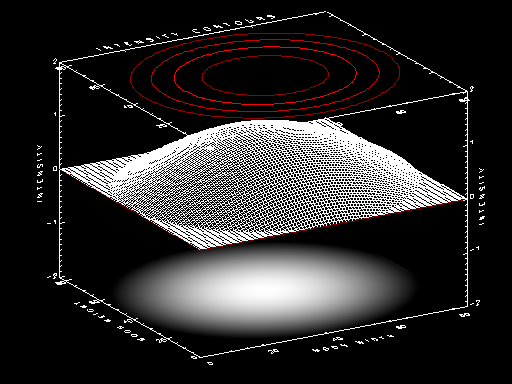
Optical illusion abstract design. Op art pattern. Vector illustration.
Official Disclosure Protocol: TERRARIUM ARhAyas Ascension Earth

https://www.ancient-literature.com/greece_hesiod_theogony.html
ReplyDelete– What is Theogony and why is it important?
Introduction | Synopsis | Analysis | Resources
The “Theogony” (Gr: “Theogonia”) of the ancient Greek poet Hesiod is a didactic or instructional poem describing the origins of the cosmos and the complicated and interconnected genealogies of the gods of the ancient Greeks, as well as some of the stories around them.
It was composed around 700 BCE, making it (along with “The Iliad” and “The Odyssey” of Homer) one of the earliest extant works on Greek mythology.
Synopsis – Theogony Summary
Back to Top of Page
(N.B. There are various alternative spellings for many of the names mentioned here. For instance, “c” and “k” are generally interchangeable, as are “us” and os”, e.g Cronus/Kronos, Crius/Kreios, Cetus/Ceto/Keto, etc, and some are better known in their Latinized form).
theogony summary, theogony, theogony hesiod summary
In the very beginning, Chaos, the nothingness out of which the first objects of existence appeared, arose spontaneously.
'' In Buddhism, Avalokiteśvara (English: /ˌʌvəloʊkɪˈteɪʃvərə/[1]), also called or Padmapani, is the bodhisattva who embodies the compassion of all Buddhas.
ReplyDelete....
The earliest translation of the name Avalokiteśvara into Chinese by authors such as Xuanzang was as Guānzìzài (Chinese: 觀自在), not the form used in East Asian Buddhism today, Guanyin (Chinese: 觀音). It was initially thought that this was due to a
lack of fluency, as Guanyin indicates the original Sanskrit form was instead Avalokitasvara, "who looked down upon sound"
https://en.wikipedia.org/wiki/Avalokiteśvara
Om Mani Padme Hum Mantra 3 Hours - 3 TIẾNG Thần Chú Mật Tông Tây Tạng Án Ma Ni Bát Di Hồng
https://www.youtube.com/watch?v=-CJ9gT4F_kY
Auṃ maṇi padme hūṃ[1] (Sanskrit: ॐ मणिपद्मे हूँ, IPA: [õːː mɐɳɪpɐdmeː ɦũː]) is the six-syllabled Sanskrit mantra particularly associated with the four-armed Shadakshari form of Avalokiteshvara, the bodhisattva of compassion. It first appeared in the Mahayana Kāraṇḍavyūhasūtra where it is also referred to as the sadaksara (six syllabled) and the paramahrdaya, or “innermost heart” of Avalokiteshvara.[2]
... It is also an ever present feature of the landscape, commonly carved onto rocks, known as mani stones, painted into the sides of hills or else it is written on prayer flags and prayer wheels... ' https://en.wikipedia.org/wiki/Om_mani_padme_hum
Mani walls[edit]
Along the paths of regions under the influence of Tibetan Buddhism, mani stones are often placed in long stacks along trails, forming mani walls
https://en.wikipedia.org/wiki/Mani_stone
Tibetan: ཨོཾ་མ་ཎི་པ་དྨེ་ཧཱུྃ (Tibetan Pinyin: Om Mani Bêmê Hum)
https://en.wikipedia.org/wiki/Om_mani_padme_hum
The first known description of the mantra appears in the Kāraṇḍavyūhasūtra (“The Basket’s Display”, c. 4-5th centuries), which is part of certain Mahayana canons such as the Tibetan. In this sutra,
Shakyamuni Buddha states,
"This is the most beneficial mantra. Even I made this aspiration to all the million Buddhas and subsequently received this teaching from Buddha Amitabha."
The sutra promotes the recitation of this mantra as a means to liberation. It states that whoever knows (janati) the mantra will know liberation as a fully enlightened Buddha. It also states that initiation into the mantra by a qualified preceptor (which is said to be a lay dharmabhanaka, vidyadhara or mahasiddha) is an important requirement for practicing this mantra. In the sutra, Avalokitesvara says that the mantra should not be given to one who has not seen the mandala
ReplyDeleteJapanese: オーム・マニ・パドメー・フーム (Ōmu Mani Padomē Fūmu) or オムマニペメフム (Omu Mani Peme Fumu); however in practice a Japanese pronunciation of 唵麼抳缽訥銘吽, such as on ma nei hatsu mi un, is used, e.g. in translations and adaptations of Journey to the West.
https://en.wikipedia.org/wiki/Om_mani_padme_hum
A mandala (Sanskrit: मण्डल, romanized: maṇḍala, lit. 'circle', [ˈmɐɳɖɐlɐ]) is a geometric configuration of symbols.
ReplyDeletehttps://en.wikipedia.org/wiki/Mandala
Mandala of the Five Buddhas
ReplyDeletehttps://www.youtube.com/watch?v=yvDafHnOi7M
- Zalmoxis Foundation -
'' Mandala is ‘Circle’ in Sanskrit and here refers to a sacred geometric figure inscribed in a circle. This is usually a square, but could be a hexagon, as in the Mandala of Vajrayogini, or a series of triangles as in the Hindu “Sri Yantra”. ....;''
'' Yantra (Sanskrit: यन्त्र) (literally "machine, contraption"[1]) is a mystical diagram ...''
https://en.wikipedia.org/wiki/Yantra